
Pallet Racking in Arlington, TX: A Guide for Central DFW Warehouse Operators
9 min read · May 2026 · DFW Pallet Racking Team
Arlington occupies one of the most strategically valuable industrial positions in the entire DFW metroplex — centered between Dallas and Fort Worth, threaded by I-30 and I-20, and home to a diverse industrial building stock that ranges from 1970s tilt-ups to modern mid-bay facilities. This guide covers what Arlington warehouse operators need to know about pallet racking installation, the local permitting process, and how to get the most from your available space.
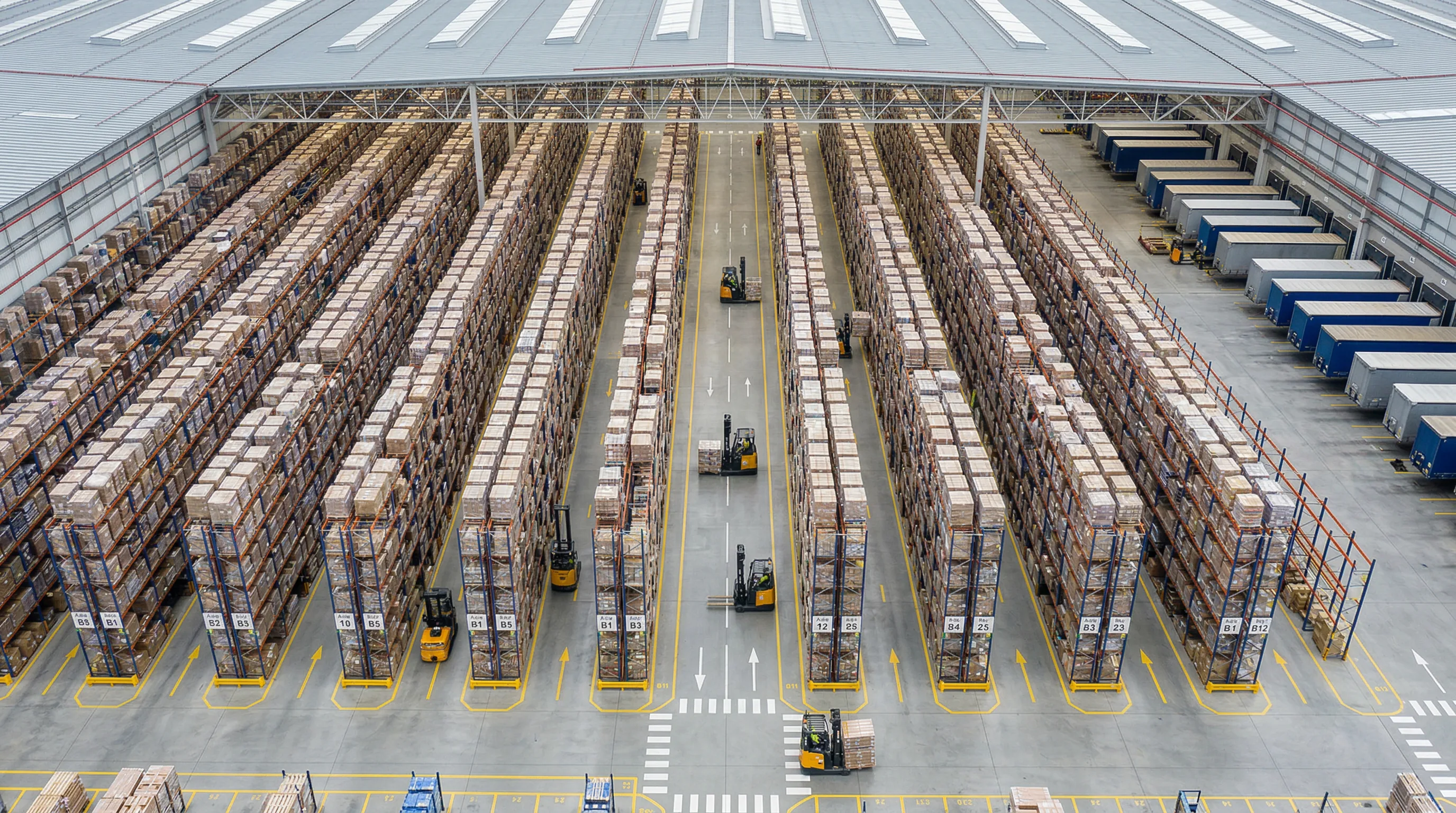
Arlington Service Coverage
DFW Pallet Racking serves the full Arlington market with same-week site visits for most projects. See our Arlington pallet racking services page for a full list of what we offer in the area, or contact us to discuss your specific facility.
Arlington's Position in the DFW Industrial Market
Arlington's geographic position between Dallas and Fort Worth makes it one of the most attractive industrial locations in North Texas. The city sits roughly equidistant between downtown Dallas and downtown Fort Worth — approximately 15 to 20 miles from each — which means Arlington-based distribution operations can efficiently serve the entire DFW metro population of over 7 million people.
The I-30 corridor through Arlington has historically been one of the most active industrial corridors in the metroplex, hosting a mix of manufacturing, distribution, and light industrial users. More recently, the I-20 corridor along Arlington's southern edge has attracted larger distribution users, drawn by proximity to intermodal facilities and the ability to serve both Dallas and Fort Worth from a single location.
Arlington's position also provides access to a large labor pool — both the cities of Dallas and Fort Worth have strong warehouse worker populations, and Arlington's own workforce is well-established in industrial occupations. For warehouse operators evaluating DFW locations, Arlington regularly competes favorably with more expensive submarkets to the north and east.
The I-30 and I-20 Corridor: What to Expect
The I-30 corridor through central Arlington is home to many of the city's older industrial properties. Buildings here tend to have lower clear heights — 18 to 24 feet is common — and older column grids that reflect the construction standards of the 1970s through 1990s. For racking purposes, this means you're often working with more constrained vertical storage potential and tighter column spacing than you'd find in a newer building.
That said, these properties often carry significant rent advantages over newer product, and many have been well-maintained or renovated. For Arlington operators running counterbalance forklift operations with standard selective racking, older I-30 corridor buildings can still deliver solid pallet capacity. The key is accurate measurement of usable clear height — which accounts for sprinkler system clearances, HVAC equipment, and beam height — not just the nominal clear height listed in the lease.
The I-20 corridor in southern Arlington offers more modern building stock. Clear heights of 28 to 32 feet are increasingly common in newer spec buildings in this area, and column grids tend to be wider — 50-by-52 feet or better. These buildings are better suited to reach truck operations and high-density racking configurations, and they attract DFW's larger distribution tenants accordingly.
Arlington Building Stock: Older Tilt-Ups vs. Newer Commercial
One of the practical challenges of racking in Arlington is the wide variance in building quality and age. Older tilt-up concrete buildings from the 1970s and 1980s — common along the I-30 corridor — were built to lower standards than modern warehouse construction. Slabs may be thinner, with lower compressive strength and less reinforcement than current code requires. This matters for racking because anchor embedment capacity depends on slab thickness and concrete strength.
Before installing racking in an older Arlington building, it's worth having the slab evaluated if there's any question about its condition. Cracked, spalled, or thin slabs may require special anchor types or reduced anchor spacing to achieve adequate hold-down capacity. Our engineering team can assess slab conditions and specify appropriate anchoring for any building condition.
Newer Arlington buildings constructed after 2005 generally present fewer slab concerns. Modern industrial slab specs call for 6-inch minimum thickness with fiber reinforcement and compressive strengths of 3,500 PSI or better — adequate for standard rack anchor requirements in most configurations. If you're moving into a newer Arlington facility, slab concerns are unlikely to be a significant factor in your racking project.
Arlington Permit Process for Pallet Racking
The City of Arlington requires building permits for new pallet racking installations above certain thresholds. As with most DFW municipalities, Arlington follows the International Building Code (IBC) and requires that rack systems exceeding specified height and load parameters be reviewed and permitted through the Development Services department.
For most commercial racking projects — anything over roughly 8 feet in height or involving significant floor loads — you'll need to submit permit drawings with engineer-of-record stamps from a Texas-licensed structural engineer. Arlington's plan review process typically takes one to three weeks depending on project complexity and current workload at the building department. Larger or more complex projects may take longer.
One common mistake Arlington operators make is starting installation before permit approval. Arlington inspectors do perform compliance checks, and unpermitted racking installations can result in stop-work orders, required dismantling, and fines. The permit process adds time upfront, but it protects you against liability and ensures your installation meets code — which matters for insurance purposes as well as OSHA compliance.
DFW Pallet Racking handles the full permitting process for Arlington projects, including drawing preparation, engineer coordination, permit submission, and inspection scheduling. See our Arlington pallet racking installation services for details on how we manage the process end-to-end.
Distribution Advantages of an Arlington Location
Arlington's central location in the DFW metroplex translates directly into distribution efficiency. From a centrally located Arlington facility, delivery drivers can typically reach anywhere within the DFW metro area within 45 to 60 minutes, making same-day and next-day delivery viable for the full metroplex market. This is a genuine competitive advantage compared to facilities positioned at the edges of the metroplex in areas like Denton or Waxahachie.
The city's highway access is exceptional by most standards. I-30 and I-20 both run through Arlington, providing direct east-west corridors to Dallas and Fort Worth respectively. SH-360 and SH-161 provide north-south access to the northern DFW suburbs and the DFW International Airport corridor. For operations that depend on outbound trucking, Arlington's access to the regional highway network is among the best in the metroplex.
Arlington also sits between two major intermodal rail facilities — the BNSF Alliance facility north of Fort Worth and the Union Pacific facility in Dallas — making rail-connected supply chains practical for Arlington-based manufacturers and importers. For businesses that receive containerized imports or ship by rail, Arlington's central position reduces dray distance to both facilities.
Racking System Selection for Arlington Warehouses
The right racking system for an Arlington warehouse depends heavily on which building stock you're occupying. In lower-clear older buildings along the I-30 corridor, selective pallet racking in single-deep or double-deep configurations is typically the best option. These systems work well with standard counterbalance forklifts, are forgiving of older floors, and can be configured to make the most of limited vertical space.
In higher-clear newer buildings — particularly in the I-20 corridor and newer developments along SH-360 — the options expand considerably. Reach trucks with narrow-aisle selective racking can access pallet positions at 28 to 30 feet, dramatically increasing cubic utilization. Drive-in and push-back rack configurations are viable for operations with deeper inventory of uniform SKUs. Pallet flow rack suits high-velocity FIFO operations.
The decision framework should start with your inventory profile: How many SKUs do you carry? What's your average inventory depth per SKU? How fast does inventory turn? The answers to these questions determine whether you need a selective, high-density, or flow-based racking system — and those answers should drive your building and aisle width decisions, not the other way around.
Working with DFW Pallet Racking in Arlington
Our team installs racking throughout Arlington and the surrounding Tarrant and Dallas County industrial markets. We're familiar with the specific building characteristics of Arlington's major industrial submarkets, the City of Arlington's permit process, and the range of forklift equipment operated by businesses in the area.
For Arlington projects, we offer complete turnkey service: site survey, layout design, engineering and permitting, installation, and post-installation inspection. We can typically complete a site survey within a few days of your initial inquiry and provide a detailed layout proposal with preliminary pallet counts before any commitment is required. Visit our Arlington services page to learn more about our full range of services in the area.
Schedule a Free Site Visit in Arlington
We'll survey your Arlington facility, assess your building's characteristics, and develop a racking plan that maximizes your pallet capacity. Same-week visits available for most Arlington locations.
Book a Site VisitArlington Racking Services
Ready to Optimize Your Warehouse?
Get a free estimate from DFW's warehouse racking experts. We serve warehouses of all sizes throughout the Dallas–Fort Worth metroplex.